Stewart Sweeney Article

This post was originally published by Stewart Sweeney on 16th April 2026 and published to Facebook. This article is republished here with permission by the author.

When the Saudi Money Falters, the Fraud Is Exposed

The wobble around LIV Golf does more than cast doubt on a golf tournament. It exposes an entire governing philosophy.

For several years now, Peter Malinauskas has sold South Australians a simple story: big events mean big success. Gather Round, LIV Golf, motorsport, endless announcements, endless hype. The formula is always the same. Fly in the cameras. Fill the grandstands. Bathe the city in spectacle. Then declare that Adelaide is “on the map” and investment will follow.

But what if this was never development at all? What if it was always just subsidy, spin and ego?

That is the real significance of the latest uncertainty around LIV Golf. Reports that Saudi Arabia’s Public Investment Fund may be reassessing or reducing support do not just create a problem for the tournament. They reveal the truth that was always there: LIV was never a normal sporting success story. It was a geopolitical vanity project, propped up by a sovereign wealth fund prepared to lose extraordinary sums for reasons that had little to do with golf and nothing to do with South Australia.

And yet the Malinauskas government embraced it as if it were the cornerstone of Adelaide’s future. That was the first absurdity.

The second is worse. South Australians were not merely asked to host this Saudi spectacle. They were asked to underwrite it politically, civically and financially. Public land, public prestige, public planning effort and now tens of millions in public money for the North Adelaide Golf Course redevelopment have all been folded into the LIV fantasy. In effect, the state hitched part of its civic identity to a Saudi cheque.

That is not vision. It is servility. For all the language of confidence and ambition, the arrangement was always built on dependence. The Saudis supplied the money. The state supplied the applause. Malinauskas supplied the sales pitch. Adelaide was told to feel flattered that an oil-rich autocracy had chosen our city as one of its promotional stages. A serious government would have asked harder questions about what exactly was being built, who controlled it, how durable it was, and what happened when the overseas patron lost interest. Instead, we got boosterism.

This is the essence of the Malinauskas model: politics as event management. Government not as patient builder of long-term public capacity, but as ringmaster. Not industry policy, but spectacle. Not structural reform, but branded weekends. Not democratic confidence, but permanent performance.

LIV was perfect for that style because it delivered images. Packed galleries. Loud music. Happy broadcasters. Young crowds. A sense of movement and modernity. It looked like momentum. It looked like success. It looked like a government doing things. But looking successful is not the same as being serious.

Strip away the fireworks and LIV was always a warning sign. A sportswashing vehicle funded by the Saudi state. A loss-making enterprise sustained not by market strength but by political will from above. A product whose future depended not on Adelaide, not on golf fans, not on any stable business model, but on decisions made in Riyadh and boardrooms far beyond public scrutiny in South Australia.

And still the government doubled down. That tells us something important about what now passes for economic imagination in this state. South Australia is no longer simply attracting events. It is becoming intellectually captive to them. The government increasingly behaves as though publicity is prosperity, as though crowds are capital, as though global relevance can be purchased one weekend at a time. This is provincialism dressed up as swagger.

The tragedy is not just that public money is being tied to fragile spectacles. It is that this obsession crowds out more serious forms of development. South Australia could be investing with far greater ambition in public transport, urban greening, public and social housing, advanced manufacturing, research, cultural institutions, climate adaptation, ageing, care, education and genuinely productive sectors that deepen local capability over time. Instead, again and again, the government reaches for the shortcut: a deal, a trophy event, a headline, a render, a concrete tower, a celebrity endorsement, a temporary sugar hit presented as destiny.

LIV is simply the most vulgar example because the money behind it is so nakedly political and the dependency so obvious.

The defenders of this model will say the event has been popular. Of course it has. Bread and circuses are often popular. That is not the point. The point is whether popularity justifies public dependence on a foreign sovereign fund and the use of state resources to entrench that dependence. The point is whether a government should reorganise public priorities around spectacles it does not control and cannot secure. The point is whether South Australians are being governed as citizens with long-term interests or as audiences to be dazzled.

And now, as doubts gather over LIV’s future, the fallback lines are becoming desperate. We are told the redevelopment will still leave a public asset. We are told the event will probably continue. We are told assurances have been received.

But this only confirms the weakness of the original case. If the course redevelopment stands without LIV, then LIV was the bait. If the government’s confidence depends on private assurances, then it never had real control. If the public is expected to wear the cost regardless, then the risk was always being transferred downward. That is the pattern here: private subsidy and performance, public exposure. Or more bluntly: Saudi money on the way up, taxpayer money on the way down.

There is also a moral cowardice at the centre of all this. The state’s political leadership mostly brushed aside the Saudi dimension because it was inconvenient to the story they wanted to tell. Human rights, authoritarianism, sportswashing was all treated as background noise beside of the thrill of international attention. But once the business case starts looking shaky, the moral compromise becomes even harder to defend. South Australians were asked not only to ignore where the money came from, but to help absorb the risk when that money became uncertain.

So what exactly was the bargain? Sell a bit of the city’s dignity for a party weekend and then pick up the bill if the sponsor blinks? This is not a mature development strategy. It is a small-state inferiority complex with a marketing budget.

Malinauskas wants South Australians to believe that this is what confidence looks like. It is not confidence. Confidence would mean building things that endure without needing to be propped up by Saudi billionaires, sovereign funds or relentless public relations. Confidence would mean backing the public realm, local capability and long-term democratic value. Confidence would mean not confusing being noticed with being transformed.

What LIV Golf now reveals is not simply the fragility of one event. It reveals the intellectual poverty of a government that has come to rely on event theatre as a substitute for economic depth and on external patrons as a substitute for public purpose.

When the Saudi cheque wobbles, the whole performance wobbles with it. And what is left behind is the bill, the spin, and the embarrassing sight of a government that mistook a petro-state’s marketing budget for a vision for South Australia.

Call to Action

The Malinauskas government’s proposal to move the LIV golf tournament to the public golf course in the north parklands will:

  • be environmental carnage; thousands of trees are likely to be cut down, with the loss of the important ecological benefits they provide
  • mean more buildings and more parking areas on green space and less parkland available for people
  • hurt and harm many people within the Indigenous community
  • create a dangerous precedent, allowing the government to simply take over any land they want. Our parklands will not be safe
  • undermine Adelaide’s iconic asset of a belt of urban parklands that has supported city thriving for centuries. 

The Parklands Association is conducting an effective and targeted campaign against the government’s plans. For more information, visithttps://www.adelaide-parklands.asn.au/.

Take a tour of the parklands to gain a greater understanding of what we stand to lose: https://events.humanitix.com/host/adel_park_lands.

To express your concern or seek answers, contact your MP (see below for email addresses):

MP**PartyElectorateEmail Address
Sarah ANDREWSALPGibsongibson@parliament.sa.gov.au
David BASHAMLIBFinnissfinniss@parliament.sa.gov.au
Jack BATTYLIBBraggbragg@parliament.sa.gov.au
Zoe BETTISONALPRamsayramsay@parliament.sa.gov.au
Leon BIGNALLALPMawsonmawson@parliament.sa.gov.au
Blair BOYERALPWrightwright@parliament.sa.gov.au
Geoff BROCKINDStuartstuart@parliament.sa.gov.au
Michael BROWNALPFloreyflorey@parliament.sa.gov.au
Nick CHAMPIONALPTaylortaylor@parliament.sa.gov.au
Nadia CLANCYALPElderelder@parliament.sa.gov.au
Susan CLOSEALPPort Adelaideportadelaide@parliament.sa.gov.au
Nat COOKALPHurtle Valehurtlevale@parliament.sa.gov.au
Matt COWDREYLIBColtoncolton@parliament.sa.gov.au
Dan CREGANINDKavelkavel@parliament.sa.gov.au
Alex DIGHTONALPBlackblack@parliament.sa.gov.au
Fraser ELLISLIBNarungganarungga@parliament.sa.gov.au
John GARDNERLIBMorialtamorialta@parliament.sa.gov.au
Katrine HILDYARDALPReynellreynell@parliament.sa.gov.au
Lucy HOODALPAdelaideadelaide@parliament.sa.gov.au
Eddie HUGHESALPGilesgiles@parliament.sa.gov.au
Ashton HURNLIBSchubertschubert@parliament.sa.gov.au
Catherine HUTCHESSONALPWaitewaite@parliament.sa.gov.au
Tom KOUTSANTONISALPWest Torrenswesttorrens@parliament.sa.gov.au
Philip McBRIDEINDMackillopmackillop@parliament.sa.gov.au
Peter MALINAUSKASALPCroydoncroydon@parliament.sa.gov.au
Andrea MICHAELSALPEnfieldenfield@parliament.sa.gov.au
Stephen MULLIGHANALPLeelee@parliament.sa.gov.au
Cressida O’HANLONALPDunstandunstan@parliament.sa.gov.au
Lee OLDENWALDER ALPElizabethelizabeth@parliament.sa.gov.au
Stephen PATTERSONLIBMorphettmorphett@parliament.sa.gov.au
Rhiannon PEARCEALPKIngking@parliament.sa.gov.au
Adrian PEDERICKLIBHammondhammond@parliament.sa.gov.au
Tony PICCOLOALPLightlight@parliament.sa.gov.au
Chris PICTONALPKaurnakaurna@parliament.sa.gov.au
David PISONILIBUnleyunley@parliament.sa.gov.au
Penny PRATTLIBFromefrome@parliament.sa.gov.au
Olivia SAVVAALP Newlandnewland@parliament.sa.gov.au
Jayne STINSONALPBadcoebadcoe@parliament.sa.gov.au
John FULLBROOKALPPlayfordplayford@parliament.sa.gov.au
Vincent TARZIALIBHartleyhartley@parliament.sa.gov.au
Josh TEAGUELIBHeysenheysen@parliament.sa.gov.au
Sam TELFERLIBFlindersflinders@parliament.sa.gov.au
Erin THOMPSONALPDavenportdavenport@parliament.sa.gov.au
Tim WHETSTONELIBChaffeychaffey@parliament.sa.gov.au
Joe SZAKACSALPCheltenhamcheltenham@parliament.sa.gov.au
Dana WORTLEYALPTorrenstorrens@parliament.sa.gov.au

**With the recent resignation of the previous sitting member, Mt Gambier will not have a sitting member until after the 2026 state election. We suggest you contact the Premier (Peter Malinauskas) or the environment minister (Lucy Hood).

The seat of Adelaide and the 2026 state election….. Ethical Events asks some questions

The proposed move of the LIV golf tournament to the course in the north parklands highlights three central concerns of Ethical Events: environmental harm; governance that lacks sufficient transparency and accountability; and inadequate attention to the protection of human rights. Ethical Events therefore asked the declared candidates ( as at14th November 2025) for the Adelaide electorate questions that centre on these three issues. Julian Amato (Liberal); Bronte Colmer (Greens); Lucy Hood (Labor) and Keiran Snape (Independent) were asked to respond to these questions (see list below). The candidates were informed that their responses would be reproduced verbatim on the Ethical Events website:

  • What is your response to the opposition from some Indigenous Australians to what they regard as a threat to Country and to heritage (both Aboriginal and colonial heritages) from changes to existing parkland to accommodate LIV golf?
  • What is your response to concerns about the adequacy of consultation with the Indigenous community with respect to this takeover of parklands, both before the legislation was passed and since that time?
  • What is your response to the concerns about potential tree, and biodiversity, loss in the north parklands, including significant and regulated trees, as a result of the planned changes?
  • What is your response to concerns that this establishes a precedent for further loss of parkland?
  • What is your response to concern about the government’s legislative takeover of a slab of the north parklands?
  • What is your response to unease that this establishes a precedent for government acquisition of land or property without comprehensive consultation?

All candidates were asked to provide answers to these questions by December 1st 2025. No response was received from Julian Amato, Bronte Colmer or Lucy Hood. The Independent candidate, Keiran Snape, did respond and his answers are reproduced (verbatim) below.  A copy of the letter of invitation can be found here.

Responses from Kieran Snape:

What is your response to the opposition from some Indigenous Australians to what they regard as a threat to Country and to heritage (both Aboriginal and colonial heritages) from changes to existing parkland to accommodate LIV golf?

This opposition is completely understandable, and I share the concerns of these groups. The threat that these changes pose to significant Aboriginal cultural sites is incredibly worrying.

What is your response to concerns about the adequacy of consultation with the Indigenous community with respect to this takeover of parklands, both before the legislation was passed and since that time?

It seems that very little consultation was completed prior to the passing of this legislation. The consultation since has been, in my opinion tokenistic, and inaccessible to the broader Kaurna community.

What is your response to the concerns about potential tree, and biodiversity, loss in the north parklands, including significant and regulated trees, as a result of the planned changes?

The potential impact to the ecosystem is completely at odds with the government’s stance on climate and environment. A well-respected golf course designer has hypothesised that the minimum number of trees lost would be 5,000. This is completely unacceptable and will undoubtedly result in loss of habitat and biodiversity in the area.

What is your response to concerns that this establishes a precedent for further loss of parkland?


What is your response to concern about the government’s legislative takeover of a slab of the north parklands?


What is your response to unease that this establishes a precedent for government acquisition of land or property without comprehensive consultation?

These actions from the state government have set a precedent that there is opportunity for the Park Lands to no longer be maintained in accordance with Light’s vision. More importantly, it is testing the public reception to this kind of takeover. Without significant backlash, there is very little to stop legislation of this kind being pushed through again. The Labor government will win a majority at the next election. Without a strong opposition in parliament, they will be able to continue to do as they wish. Unfortunately, it is all too common for public consultation to be disregarded in matters of development. I would like to see impacted communities adequately consulted, with a commitment to take any feedback on board and attempt to adapt projects in line with the needs of the community.

On Humpty Dumpty and LIV Golf

Aren’t words funny things? Simple words can, it seems, mean the opposite of what they actually …  well … mean.  Premier Malinauskas is apparently a devotee of the Humpty Dumpty school of language: “When I use a word,” says Humpty “it means just what I choose it to mean….”. 

Who knew ‘investment’ means chopping down trees?

Our Premier proudly announced that moving LIV golf from Grange to North Adelaide entails “investment” in Adelaide’s famed and treasured parklands. What does this investment mean? The loss of perhaps 600 trees and the eviction of over 100 species that currently make their home in the ‘investment’ site.  New buildings will be constructed, but the government can’t say how many, or how big they will be.  Expanded  parking facilities  will also pave over more green space. A large amount of existing parkland will be fenced off from the public. As yet, how much and how long it remains in place, remains unknown, at least to the public. Can the parklands withstand this ‘investment’? Significant tree and biodiversity loss, less green space and more built infrastructure suggest parkland destruction, rather than investment. 

Is War Memorial Drive safe?  Or the River Torrens precinct? A well-placed and credible local journalist, Mike Smithson, is putting his money on LIV’s ‘colossus clubrooms’ being on the tennis courts, across from Adelaide Oval on  War Memorial Drive, or on the site of the now defunct Red Ochre and River Café. If this prophecy is correct, it will see the Premier’s investment entail Adelaide’s citizens having less access to their parklands. The Planning Minister, Nick Champion,  conceded that the government’s new legislation allowed for potential closure of War Memorial Drive, but said the government had ‘no desire’ to do this. The legislation would, however, be implemented if the government needs the flexibility to close the road during building. This sounds like a Humpty Dumpty “No desire” — meaning there could be closure of War Memorial Drive and disruption to the River Torrens. 

Does a bigger and better LIV mean a more transparent and accountable one?

The government is fond of grandstanding about the financial benefit of LIV Golf for the state’s economy; a yield of $81 million from the last tournament, we are told. But what we are not told, despite repeated requests, is where that money goes. Shouldn’t such a great success be accompanied by a detailed statement about how, and by how much, South Australians benefitted? 

Similarly, the government remains tight-lipped on how much it spends on hosting LIV. Ultimately, taxpayers help fund this Saudi tournament. Yet we are not told how much of our money is spent. Finally, the North Adelaide course, loved and used by generations of South Australians, is to be remodelled. The redesign will be done by Greg Norman. The government clearly feels it has pulled off a coup by having the great white shark overseeing the devouring of approximately 20% of the north parklands. We can assume it won’t be cheap, but that information is not being shared with the public. Apparently, we don’t have the right to know. 

Speaking of coups, the government has staged another one. Without consultation or negotiation, the government rushed through legislation removing the Adelaide City Council’s long-term control of a large slab of the parklands in another blow to transparency and accountability.

In the end, all the public are told is that LIV is good for them. An assertion we have to take on faith, it seems.  

And, about human rights…..

Despite the best attempt of some apologists to spruik improvements, human rights abuses continue in Saudi Arabia. The human rights of migrant workers, women and dissidents remain curtailed and precarious. No amount of sportswashing will erase this inconvenient truth. 

A human rights issue is unfolding closer to home. The lack of adequate and appropriate consultation about the fate of the parklands, which are significant to Kaurna people, sits oddly with the is government’s insistence that it acknowledges the rights of First Australians to have a say over what happens to areas of importance to them. 

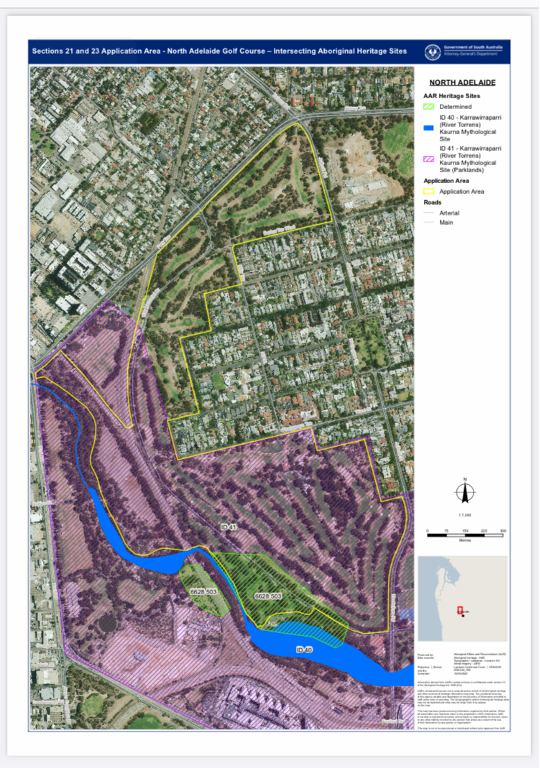
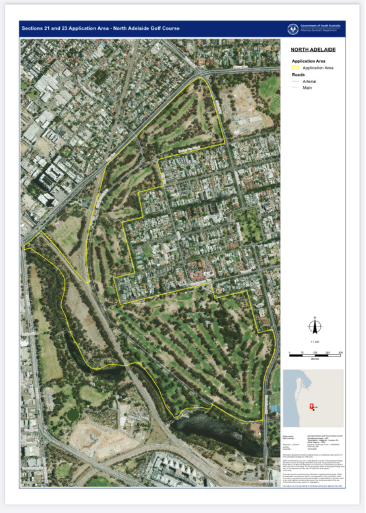
The LIV footprint over the Adelaide parklands is significant, including an extensive overlap with recognised Kaurna sites under the SA Aboriginal Heritage Act. See the photos attached.

Under the First Nations Voice Act 2023 (“the Act”), South Australia has a legislated First Nations Voice to both the Parliament and the Government. Section 28 (1)(c) of the Act empowers the State First Nations Voice to advise the SA Parliament and the SA Government on ‘matters of interest to First Nations people’. Consultation with First Nations community members prior to this advice is embedded in the Act. 

The takeover by the State Government of a large parcel of Adelaide Parklands, previously managed by the Adelaide City Council, an area designated as Kaurna Heritage sites under the Aboriginal Heritage Act, would be a matter of interest to First Nations people. Yet the government rushed legislation through Parliament (in less than a day), meaning there was no opportunity for the State First Nations Voice to advise the government on the proposed legislation. 

After this legislation was passed, a month long YourSAy SA online consultation commenced under the Aboriginal Heritage Act. A meeting for Aboriginal people was scheduled for mid July in a Mawson Lakes venue. Questions remain about the efficacy of this consultation process and whether it is culturally appropriate. We cannot answer those questions. Nevertheless, we note the consultation process is a short one, at arms lengths from the Kaurna community and undertaken after Parliament passed government-initiated, game-changing legislation. 

Image taken from SA Government consultation on the North Adelaide Golf Course.

Adelaide’s Parklands – discussion with candidate Keiran Snape

This episode of the Adelaide Chronicles Podcast features a discussion with current Adelaide City Councillor and candidate for the upcoming South Australian election Keiran Snape.

Adelaide Chronicles Podcast – Keiran Snape

Keiran is an Adelaide City Councillor and he has long opposed LIV, including on Human Rights grounds. 

When the announcement was made to move LIV to the North Adelaide Parklands, a move which will be environmentally devastating and interfere with indigenous heritage sites, Keiran increased his advocacy on this issue. Keiran also launched his campaign as an independent candidate for the State seat of Adelaide. 

The irresistible advance of sportswashing?

Australians woke on Wednesday morning to the news that the Saudi backed LIV tour had merged with America’s Professional Golf Association (PGA) and DP, the European Golf Tour. The back room deals of obscure golfing organizations might appear irrelevant, but they are not. This is a blow to human rights across the globe.  All three golf tours (LIV, PGA and DP) will form a new organizational entity to run men’s golf and it will largely be underpinned by the Saudi Public Investment Fund (PIF). The PIF may be the world’s premier sportswashing body and it has scored a marketing coup with this amalgamation. It now has a large degree of control over the entire sport of men’s golf.  Given that almost every golf tournament of consequence will be in large part funded by the Saudis, every tournament will be an exercise in sportswashing, which has now gone global.  Every men’s tournament, by definition, will be an unethical event. 

According to one report, what form the LIV tour will take in 2024 is now unclear (https://www.smh.com.au/sport/golf/pga-and-european-tours-in-shock-merger-with-saudi-backed-liv-20230607-p5dekc.html). This raises some interesting questions for Premier Malinauskas. After spending money to attract the LIV tour to Adelaide (we don’t know how much, because the government refuses to tell us), will the event go ahead in 2024? If it does proceed, will it still attract top-tier golfers now that PGA and DP tournaments are open to them? A trip down under in the northern hemisphere spring may be looking less appealing than it did before Wednesday’s announcement. Perhaps the most compelling question for the Premier, given the uncertainty that now hangs over the LIV tour, was the reputational damage to South Australia worth it? 

The other unpalatable implication of the almost wholesale Saudi takeover of golf is, what sport is next? The answer is unclear, but it should concern all of us because no sport can now be considered safe from the sportswashing march of the Saudis. Craig Foster sums up the dangers:

Saudi Arabia taking over much of global professional sport and in so doing, co-opting influential sporting bodies & much of their fanbases as we’ve seen with @NUFC who quickly become defenders of human rights abuse & promoters of the regime.